Where
stanford d.school
What
interactive installation
Duration
5 weeks
Skills
wet paper felting
traditional bookbinding
material research
Overview
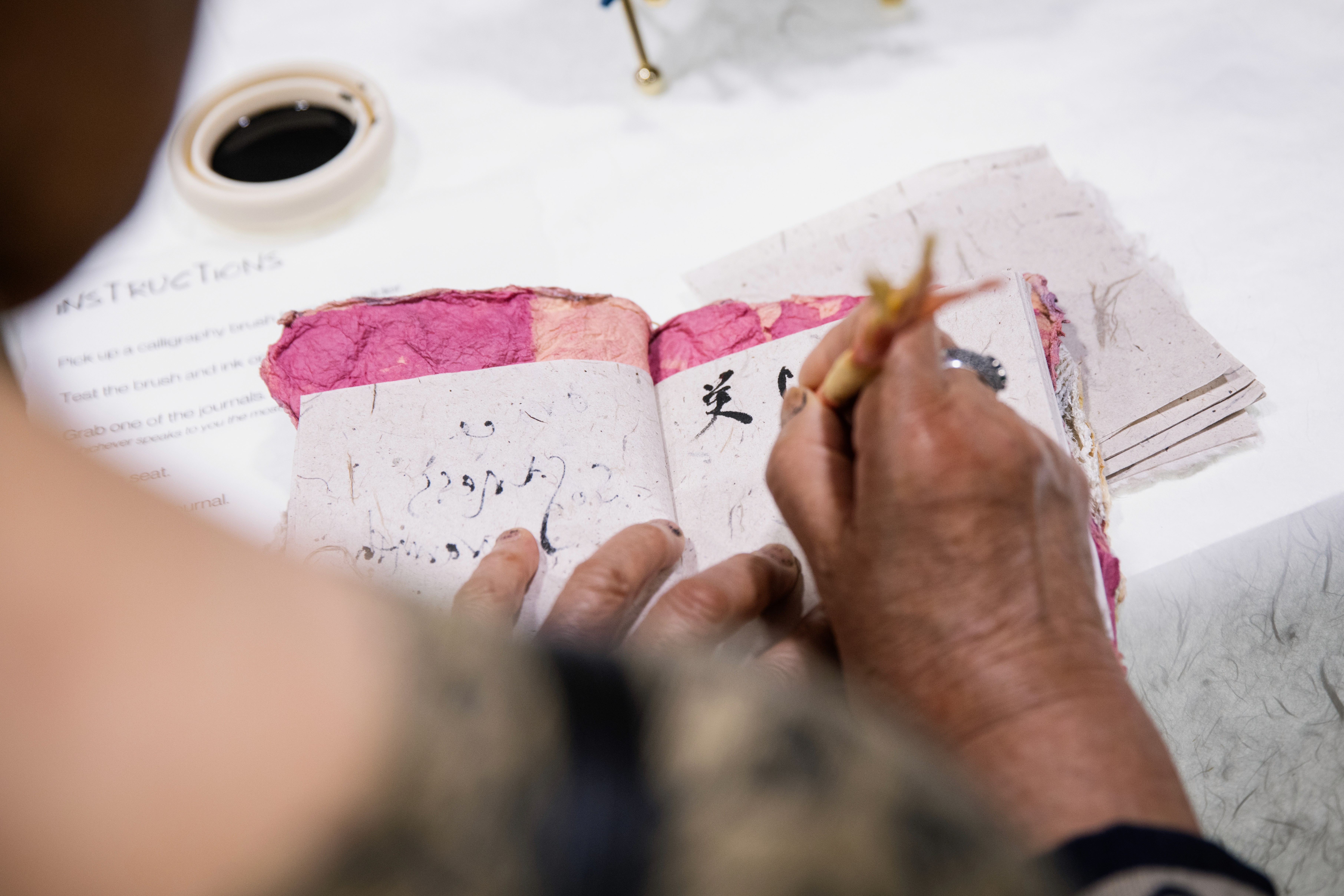
Joomchi is a 500-year-old Korean paper-felting technique that uses only water and the fibers of hanji (traditional Korean mulberry paper), no glue, no binding agents. Through repeated kneading, rubbing, and layering, delicate sheets transform into a strong, leather-like material. For a class project, I created an interactive installation of hanji journals, calligraphy brushes, and a brush holder, all felted and formed by hand, inviting others to feel the slow, meditative dialogue between maker and material.
Material exploration
I was drawn to joomchi for the meditative conversation it fosters between the hands and the material (hanji). There is a wildness to joomchi, defined by uncertainty and the quiet trust you build with the material. Historically, it was a form of resourceful upcycling: during the Goryeo and Joseon dynasties, discarded books were reworked into clothing, pouches, and even armor. I was drawn to that lineage of transforming written words into something lasting and functional, and wanted my piece to carry that element forward.


The Installation
I wanted my audience to feel what I had experienced throughout this meditative and conversational process, which led me to create an experimental, interactive installation featuring two journals, calligraphy brushes, and a brush holder, all kneaded and formed from hanji using the joomchi technique. The journals honor joomchi's historical roots, bound using a traditional Korean bookbinding technique called seonjang. The brush holder pays tribute to the word 'joomchi' itself, derived from joomoni (pouch), and shows how paper, through patience, can hold space, both literally and metaphorically.